





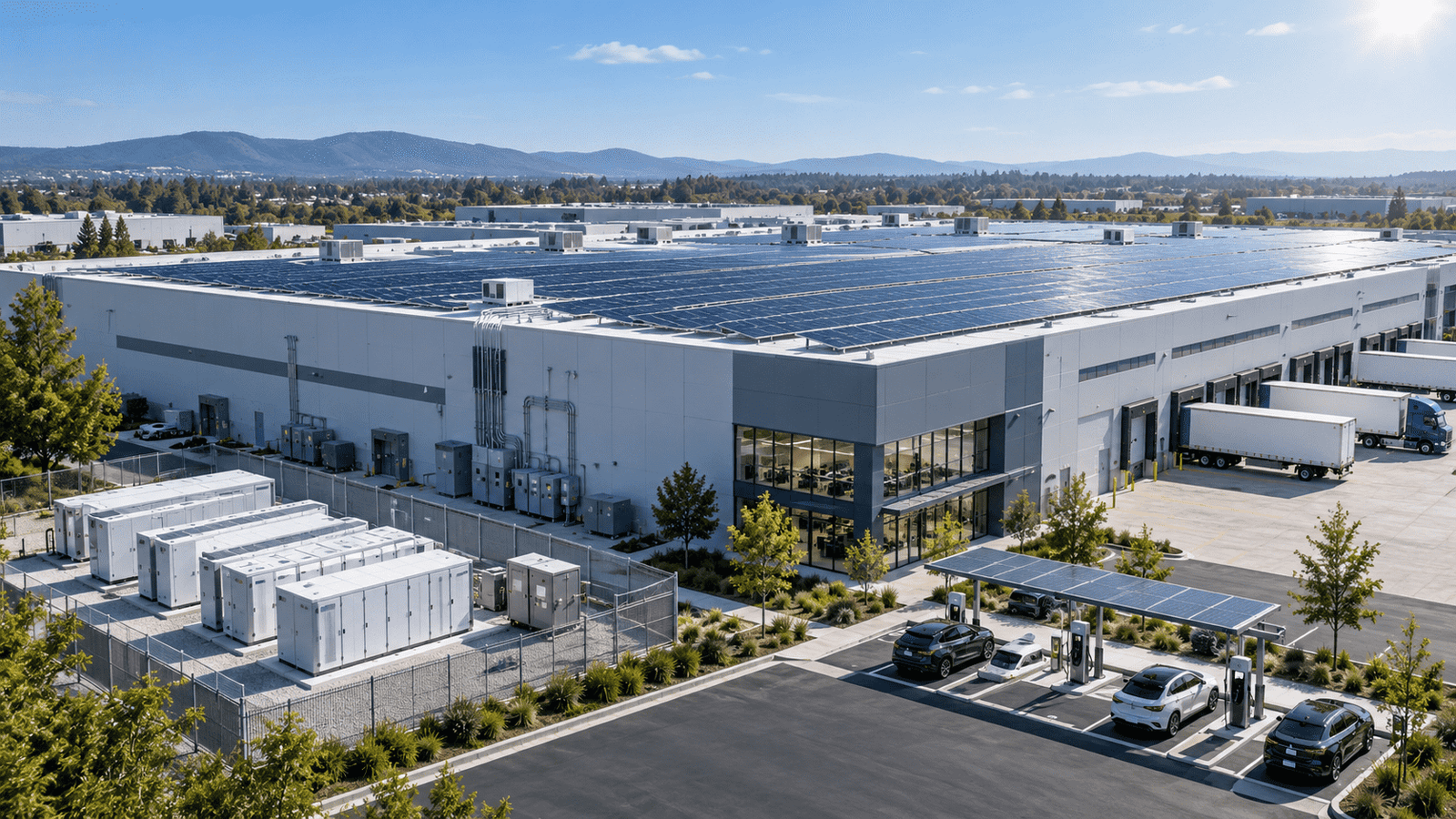
Solar generation rises around midday. Yet your facility’s highest electricity demand may occur during the evening shift. If fleet vehicles return and begin charging at the same time, demand can rise further.
Daily generation totals alone cannot explain how well an energy system serves a facility. When electricity is generated and consumed matters just as much.
That timing is the starting point for considering solar power, battery storage and electric vehicle charging as one coordinated system.
Daily totals can hide a timing mismatch
A facility’s daily electricity consumption may be close to the amount produced by its solar installation. But if generation and consumption occur at different times, the facility may draw power from the grid during some periods and produce a surplus during others.
When appropriately designed, battery storage can retain some of that energy for later use, helping the facility consume more of its own solar generation. The outcome depends on the generation profile, load requirements, grid connection conditions and system losses. Source: integrating solar power, charging and battery storage.
Do all vehicles need to charge at full power at the same time?
Fleet vehicles may return to a depot together, but they may not all need to depart at the same time.
Charging management can distribute demand over time by considering departure schedules and the energy each vehicle needs. This can help control simultaneous demand and make better use of solar generation when it is available. Source: smart charge management.
Charging infrastructure should therefore be designed around more than the number of chargers and their rated power. Vehicle operating schedules are an important design input.
Battery selection involves two different capacities
Power and energy describe different aspects of a battery system.
Power indicates how much electricity the system can deliver at a given moment. Energy capacity determines how long it can sustain that output.
For example, a system with 1 MWh of usable energy could theoretically supply a 500 kW load for two hours, before accounting for losses and other limitations. Actual duration depends on the state of charge, auxiliary consumption and operating limits. This example illustrates the calculation; it is not a product performance guarantee.
Installing a battery also does not automatically give a facility an uninterruptible backup supply. That function requires suitable power conversion equipment, grid isolation, transfer arrangements and protection.
The right investment starts with the facility’s own data
Appropriate sizing begins with a combined assessment of the load profile, expected solar generation, vehicle charging needs and existing electrical infrastructure. The financial assessment must also consider the tariff structure, investment costs, system losses and changes in battery capacity over time.
These inputs help determine which equipment is needed and at what capacity. For some facilities, load management is the priority. For others, storage or an upgrade to the grid connection may offer greater value.
Explore Powearion’s solar energy, battery storage and electric vehicle charging solutions and discuss how your facility’s generation and consumption needs can be addressed together.